
What does it mean when external patient records are available but not used?
External patient records are available but not used when a hospital receives outside clinical information, yet clinicians cannot quickly find, interpret, verify, or apply it during the patient encounter. [1]
A clinician may see that an outside record exists but still repeat the patient’s history or consider another scan because the relevant result is buried in a long document, duplicated, outdated, difficult to reconcile, or displayed outside the active EHR workflow. [1][2]
Health information exchange (HIE) enables authorized organizations to share electronic health information. EHR integration goes further by placing relevant information inside the receiving clinical workflow. ONC describes interoperability as supporting the exchange and use of electronic health data for care and coordination. [3]
Key Takeaways
- U.S. hospitals increasingly send, receive, find, and integrate external health information. [4]
- In 2023, 71% of non-federal acute care hospitals reported routine access to necessary outside information at the point of care, but only 42% reported that clinicians often used it. [1]
- The main failure is usually between retrieval and clinical use: the record arrives, but it is not sufficiently organized, current, trusted, or visible. [1][2]
- A complete solution connects patient matching, approved retrieval, normalization, duplicate handling, provenance, EHR placement, and clinician verification. [5][6][7][8]
- Abstractive Health publicly documents an Epic integration pattern using SMART on FHIR, optional HL7 ADT/SIU feeds, FHIR/HIE retrieval, and Epic Navigator placement. [6]
- Ysquare can customize the same established interoperability pattern as a proposed External Record Intelligence Agent. This is not a claim of an existing Ysquare hospital deployment.
How does the problem appear in a U.S. emergency department?
Patient journey: The outside scan exists, but the clinician cannot use it quickly
1. The patient arrives after receiving care elsewhere
A patient arrives at a U.S. emergency department after visiting another hospital, outpatient imaging center, or specialist. The patient may not remember the exact facility, diagnosis, medication change, or date of the previous test.
2. Registration identifies the patient and retrieves outside records
Registration or an automated integration sends patient demographics and encounter identifiers through an approved interface. An HIE or vendor network searches for matching records and returns available documents. [5][6]
3. The EHR shows that outside information exists
The clinician sees an external-record notification, document list, or link to an outside-record viewer. The system has technically completed an important part of the exchange workflow. [1]
4. The relevant finding is difficult to locate
The returned material may include CCDs, discharge summaries, laboratory results, imaging reports, scanned PDFs, medication lists, and duplicate documents. The clinician must search for the finding that matters to the current decision. [9][2]
5. The clinician decides whether the record is trustworthy and current
The clinician checks the source organization, date, patient identity, result status, and whether the document is a duplicate or superseded version. If this takes too long, the clinician may gather the history again or consider repeating a test. [2][10]
6. The operational handoff fails even though the exchange worked
The outside record was available, but the workflow did not convert it into concise, trusted clinical context. This is the point at which technical interoperability can fail to produce practical clinical value.
Patient and team impact
| User | Pain point | Operational risk |
|---|---|---|
| Patient | Repeats history and may not know whether prior care was found. | Longer intake and lower confidence in coordination. [1] |
| ED clinician | Searches documents and compares dates and sources. | Cognitive load and delayed context. [1][2] |
| Registration | Handles incomplete demographics or identity exceptions. | Retrieval delays and manual work. [5] |
| Health-information management | Manages duplicate, aged, and unreconciled files. | Growing document volume. [7] |
| IT and clinical informatics | Tracks exchange activity without proving clinical uptake. | Technical success disconnected from bedside value. [1] |
What is the current external-record workflow?
The workflow follows four steps: Identify → Retrieve → Normalize → Organize → Display → Verify. [5][2][6]
1. Registration matches identity and retrieves outside encounters
Patient details are used to match the correct person and locate available outside encounters. [5]
2. An HIE or vendor network sends relevant results and discharge summaries
Available clinical information is transferred from outside providers to the receiving hospital. [3][2]
3. The EHR places current medication, imaging, and test information in the clinician’s decision workflow
Relevant outside information appears where the clinician reviews the patient and makes care decisions. [6]
4. The clinician verifies provenance and uses the information to decide next steps
The clinician checks the source, date, and relevance of the information before using it to guide care. [8][10]
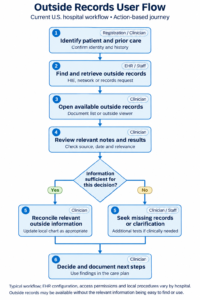
Figure 1. Current External Records retrieving workflow.
Where is the exact failure point?
The exact failure point is usually the handoff between outside-record retrieval and clinical use. A CCD or external document is technically available, but critical information is difficult to find, old, duplicated, unreconciled, or outside the clinician’s working screen. [1][2]
| Failure point | What goes wrong | Operational risk |
|---|---|---|
| Identity uncertainty | The system cannot confidently link an external record to the current patient. | Wrong-record risk or manual matching delay. [5] |
| Unfiltered retrieval | The clinician receives a large document collection without prioritization. | Relevant findings are missed or take too long to locate. [2] |
| Duplicate documents | The same event appears in multiple files or formats. | Review time increases and the most recent evidence is unclear. [7] |
| Missing freshness | The date, result status, or medication-change date is not obvious. | Clinician may rely on outdated information. [2] |
| Separate viewer | The external information is not visible in the active EHR workflow. | Clinician may skip the record under time pressure. [6] |
| No provenance | A summary does not show the source note, report, authoring organization, or date. | Clinician cannot quickly verify the statement. [8] |
| No conflict handling | Contradictory results are silently merged or ranked without explanation. | Unsupported certainty and unsafe interpretation. [10] |
| Technical metrics only | The hospital tracks exchange activity but not clinical use. | Connectivity increases without proving bedside value. [1] |
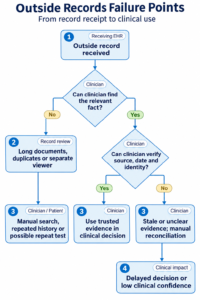
Figure 2. The failure-point path shows how technically available information becomes operationally unusable.
How large is the U.S. hospital gap?
ONC’s 2023 analysis found that 71% of non-federal acute care hospitals routinely had necessary information from outside providers available electronically at the point of care, while only 42% reported that clinicians often used it. [1]
ONC Quick Stat #66 reports technical progress in 2025: 96% of hospitals sent information, 93% received it, 94% found it, and 79% integrated it without manual entry. Seventy-six percent engaged in all four domains. [4]
These figures measure different stages. Integration capability does not guarantee that the right fact appears in the right workflow or that clinicians use it. Send and receive rates show movement; find and integrate rates show access and technical placement; clinical-use measures show bedside value. [1][4]
What is the impact on hospitals and clinicians?
Clinicians spend time hunting for context, judging which record is trustworthy, and comparing duplicate or dated information. Registration and health-information management teams may handle more identity and reconciliation work. IT teams may see exchange activity grow without a corresponding improvement in bedside decisions. [1][11]
The impact should be measured carefully. A repeated test is not automatically avoidable. It may be clinically appropriate when the prior result is too old, unavailable, incomparable, incomplete, or not trusted.
What solution workflow is documented by the reference implementation?
Abstractive Health’s Epic integration guide documents a workflow in which optional HL7 ADT/SIU feeds trigger record retrieval at check-in or admission. FHIR and HIE connections retrieve available information, while an embedded SMART on FHIR application presents summaries within Epic workflows, including ED Arrival, ED Provider Note, discharge, and handoff. [6] Sentence-level source links help clinicians open and verify supporting notes. [8] Health Gorilla separately documents duplicate suppression; [7] conflict flagging remains a proposed Ysquare addition.
This approach supports emergency, inpatient, outpatient, handoff, and discharge teams. Abstractive Health’s published emergency-medicine evaluation involved encounters at NewYork-Presbyterian/Weill Cornell Medical Center. [10] This provides evidence about AI-generated handoff summaries, but does not establish that every organization uses the same outside-record integration or achieves the same outcomes.
Reported benefits include approximately four-minute average record retrieval and around 30% less preparation time, according to Abstractive Health. [9][8] A small vendor-reported evaluation involving two physicians and 12 patient cases found comprehension accuracy increased from 60% to 83.3% with AI summaries under a three-minute review limit. [12] Health Gorilla’s duplicate suppression supports easier review, although the cited documentation does not quantify time saved. [7] These findings do not establish fewer repeat scans or shorter ED stays.
How does Ysquare apply the same established approach?
Ysquare’s proposed External Record Intelligence Agent would customize the established pattern for a hospital’s systems and clinical workflow. It would connect encounter-triggered retrieval, approved exchange interfaces, document intelligence, source-linked summarization, EHR placement, and audit controls.
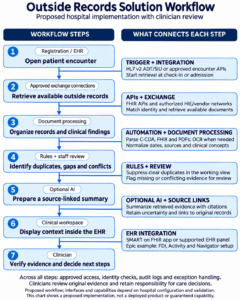
Ysquare’s AI Doc solution describes healthcare-document parsing, structured extraction, customizable templates, filtering, and standardized reports. Those capabilities could support external-record processing after validation of connectivity, security, provenance, clinical accuracy, and human review. [14]
| Ysquare capability | What it adds | Pilot validation |
|---|---|---|
| Encounter-triggered retrieval | Starts from check-in, admission, or SMART context. | Confirm timing, scope, permissions, and interfaces. |
| Evidence extraction | Identifies diagnoses, results, medication changes, and dates. | Test accuracy across document types. |
| Organization and deduplication | Groups findings and reduces clear repeats. | Measure false suppression. |
| Conflict flags | Makes missing or contradictory evidence visible. | Test escalation quality. |
| Source-linked summary | Gives concise context with original-document links. | Test citation validity and completeness. |
| EHR context panel | Places output inside the clinician workflow. | Validate SMART/Epic configuration. |
| Audit and governance | Records access, sources, outputs, and review. | Confirm security and retention controls. |
What outcomes can hospitals expect and measure?
Hospitals should separate expected operational outcomes from verified study results.
| Outcome | How the workflow helps | Suggested measure |
|---|---|---|
| Faster record review | Prefetching and structured context reduce document hunting. | Retrieval-to-view time. |
| Better traceability | Findings link to original notes and reports. | Valid source-link rate. |
| Lower duplicate burden | Clear repeated records are reduced in the working view. | Duplicate and false-suppression rate. |
| Better uncertainty handling | Conflicts and missing evidence are visible. | Correct escalation rate. |
| Greater clinical use | Context appears where decisions occur. | Outside information viewed before a potentially duplicative order. |
| Better governance | Access, sources, outputs, and review events are logged. | Audit completeness. |
The Ysquare 60-30-10 rule
Ysquare’s proposed approach can be summarized as a 60-30-10 rule: spend most of the effort on the workflow and evidence that clinicians can trust, a meaningful portion on integration and data quality, and a focused portion on AI-generated summaries.
| Effort | Focus | Why it matters |
|---|---|---|
| 60% – Clinical workflow and trusted evidence | Patient matching, retrieval scope, source links, freshness, conflict handling, EHR placement, and clinician verification. | This is where availability becomes usable clinical context. A summary cannot compensate for the wrong patient, missing evidence, or a source that cannot be checked. |
| 30% – Integration, data quality, and governance | EHR interfaces, FHIR/HL7 connections, HIE coverage, document parsing, terminology, security, auditability, and exception handling. | Reliable interoperability and controlled data handling make the workflow dependable across systems and encounters. |
| 10% – AI summarization and presentation | Concise, source-linked summaries, prioritization, and display within the clinician’s workflow. | AI adds value only after the underlying records, identity, provenance, and workflow are sound. It should assist review, not replace it. |
The rule is an editorial planning framework, not a clinical standard or a claim that every implementation must allocate exactly these proportions. Its purpose is to prevent hospitals from treating AI summarization as the entire solution when the larger opportunity is making trusted evidence usable at the point of care.


